



What is the process of water filtration? At its core, it is a sequence of stages, each one removing a specific type of contaminant, until water reaches a glass clean, clear, and stable.
Homeowners on well water tend to ask this question first, since private wells pull straight from the ground and carry sediment, minerals, and organic material that city systems have already stripped out before the water leaves the treatment plant.
That difference is exactly why filtration systems for wells exist as their own category, engineered for raw, untreated water rather than water that has already passed through a municipal plant.
The Layers of Filtration, Explained
Filtration isn’t just a single step. It's a chain, and each link in that chain has a job.
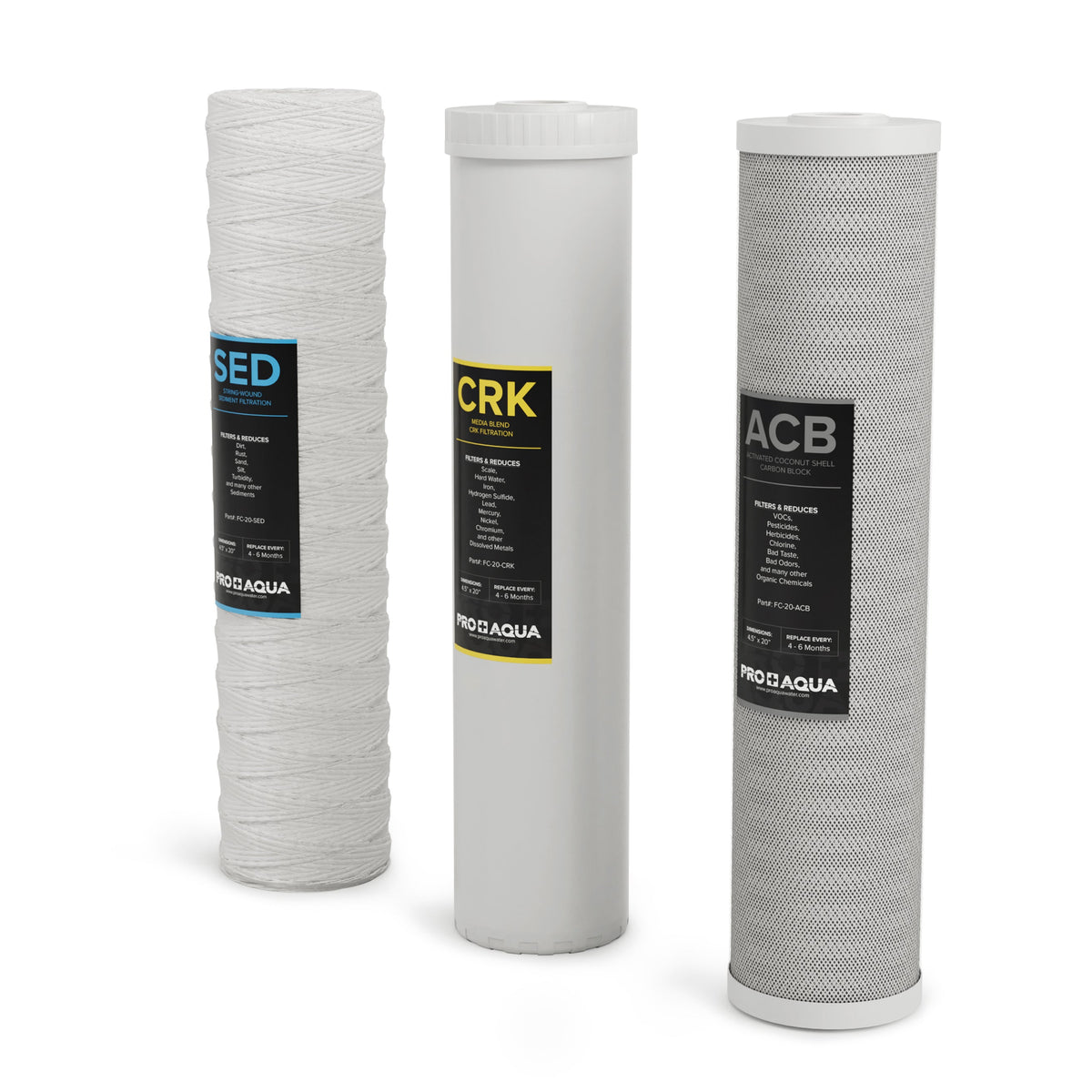
The first stage almost always deals with physical particles: sand, rust flakes, silt, and other visible debris. A sediment filter catches these before they can scratch fixtures, clog pipes, or reach the next stage of the system and shorten its lifespan.
Without this step, every filter downstream works harder and wears out faster.
The second stage typically targets taste, odor, and chemical residue.
Activated carbon does most of this work, pulling chlorine, certain pesticides, and volatile compounds out of the water through an adsorption. There, instead of passing through it, contaminants stick to the surface of the carbon.
This is the stage that turns water from "technically drinkable" into water that actually tastes clean.
The third stage, when present, handles what the first two can't: dissolved minerals, heavy metals, and microscopic contaminants too small for carbon or sediment filters to touch.
This is where reverse osmosis or specialized media steps in, and it's usually the final barrier before water is considered fully treated.
Not every home needs all three stages running at once. A house on municipal water with no odor complaints might only need a carbon filter.
A home on a well with hard, cloudy water usually needs the full sequence, sometimes with a softener added on top to handle calcium and magnesium separately from filtration itself.
Why Well Water Needs Its Own Approach
City water arrives pre-treated, tested, and regulated before it ever reaches a home. Well water skips all of that. It comes directly from an aquifer, and whatever is in the ground, iron, sulfur, bacteria, sediment, dissolved gases, comes along with it.
This is the reason well owners generally need a more layered setup than someone on a municipal line. A single carbon filter won't touch iron staining or sulfur odor, and sediment left unchecked will wreck a water heater over time.
Testing the water first matters more here than almost anywhere else, since the right filtration setup depends entirely on what the well is actually producing. Once that picture is clear, a system can be matched to the specific contaminants present rather than guessed at.
Whole-House Filtration in Three Stages
For well owners who want one system to handle the bulk of the work, a whole-house setup built around three stages tends to cover the widest range of problems without adding unnecessary complexity.
The well water filter system: 3-stage whole house follows this exact structure: sediment first, carbon second, a specialized media stage third, all working on water before it splits off to individual fixtures.
The appeal of a whole-house setup is that it treats every drop entering the home, not just the water at one sink.
Showers, laundry, dishwashers, and drinking taps all pull from the same treated supply, so problems like scale buildup in appliances or chlorine smell in the shower can be handled at the source instead of fixture by fixture.
Filtration for RVs, Boats, and Life on the Move
Filtration isn't only a concern for people with a fixed water line. Campers, boat owners, and anyone filling tanks from unknown municipal or well connections on the road face a different version of the same problem: unpredictable water quality with no control over the source.
A portable water softener pre-filter regeneration kit solves this by combining a pre-filter with regeneration capability in one compact unit, cutting sediment, chlorine taste, and odor before water reaches tanks or fixtures.
It's built for exactly this kind of shifting water source, where the filtration setup has to adapt to whatever the next campground or marina hookup provides rather than one consistent municipal supply.
Where Reverse Osmosis Fits In
Reverse osmosis sits at the far end of the filtration spectrum.
Instead of relying on physical straining or carbon adsorption alone, it forces water through a semi-permeable membrane. The membrane is fine enough to block dissolved salts, heavy metals, and contaminants that earlier stages pass right through.
What is reverse osmosis water filtration, exactly? It's the stage most people picture when they imagine truly purified water: a membrane so fine that only water molecules make it through in meaningful volume, leaving everything else behind to be flushed away.
It's usually installed as a final, targeted stage rather than a whole-house solution, often under a kitchen sink where drinking and cooking water get pulled.
For a closer look at how the membrane itself works, our page on reverse osmosis basics breaks the mechanics down stage by stage.
Pairing reverse osmosis with an earlier sediment and carbon stage extends the membrane's lifespan considerably, since it isn't stuck filtering out debris the earlier stages should have already caught.
The Right Water Starts With the Right Setup
We've spent years matching filtration systems to the water people actually have, not the water they assume they have. That distinction matters more than most homeowners realize until a system underperforms because it was built for the wrong contaminants.
A softener won't fix sulfur odor, and a carbon filter alone won't touch dissolved iron, so getting the sequence right from the start saves money, time, and frustration down the line.
PRO+AQUA builds every system, from full three-stage whole-house units to portable kits for life on the road, around that same principle: know the water first, then filter accordingly.
Our lineup covers well water, municipal water, RVs, and everything in between, backed by warranties built for the long haul and support from people who know water chemistry inside and out, not just product specs.
Trusting a stranger's setup with your household's water is a big decision, and we've built our reputation on making that decision easy.
If you have any questions about PRO+AQUA's filtration systems, feel free to reach out. We're glad to help you figure out exactly what your water needs.


Leave a comment
This site is protected by hCaptcha and the hCaptcha Privacy Policy and Terms of Service apply.